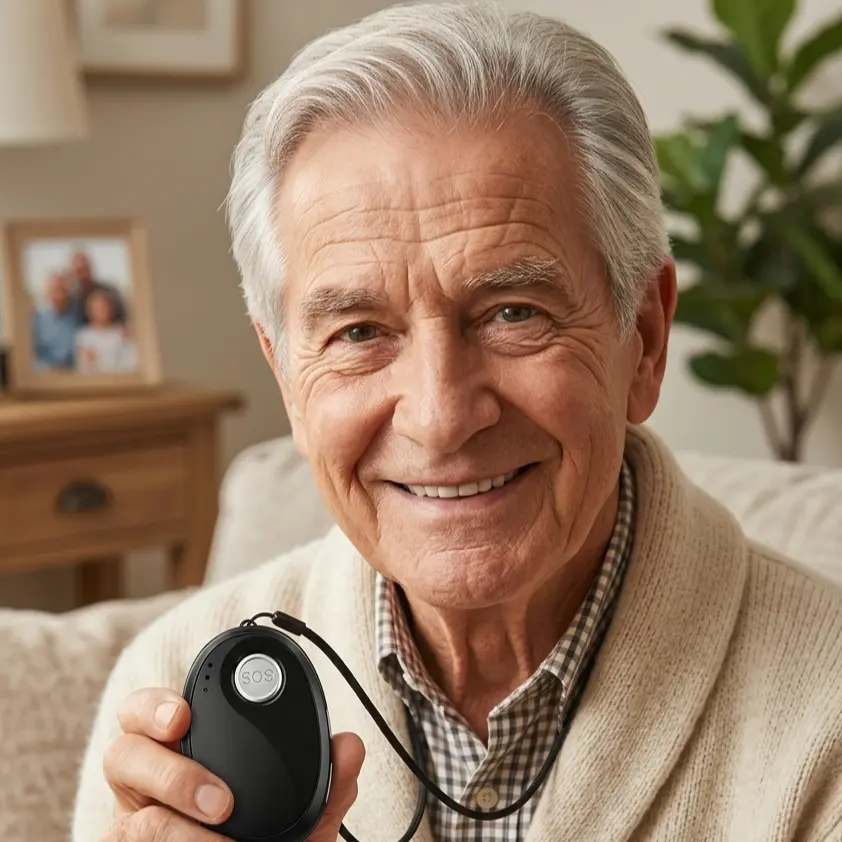
If a person with dementia might wander and get lost, good preparation helps most: a recent photo, a list of familiar places, an agreed emergency chain and an emergency button with location tracking that the person is happy to wear. If a person with dementia goes missing, relatives should not search alone for long, but call the police or the emergency number 112 early if there is any danger.
What does “wandering” mean in dementia?
Wandering is when a person with dementia sets off with a purpose, following an inner reason, and loses their bearings along the way. Many specialists stress that wandering is rarely aimless: from the point of view of the person with dementia, they are not running away but trying to get somewhere.
Common reasons are old habits and duties from earlier stages of life. A person with dementia may want to go to work, pick the children up from school or go “home”, which often means the house they grew up in. Restlessness, boredom, pain or a simple urge to move can also trigger wandering.
This perspective helps families. Relatives who understand the reason behind the wandering can often prevent it rather than simply stop it, and they find a missing person with dementia faster, because the search starts at the places that mean something to that person.
Why is the risk higher in autumn and winter?
In autumn and winter it gets dark early, and cold and wet weather make every walk outdoors more dangerous. A person with dementia who gets lost in the dark is harder to see, finds it even harder to get their bearings and can quickly become dangerously cold at low temperatures.
There is also a pattern that carers and relatives often notice: many people with dementia become more restless and confused in the late afternoon and early evening. This evening restlessness is known as “sundowning”. In the darker months, this restless phase coincides with nightfall.
This leads to a simple rule for the darker months: calm, well-lit rooms in the afternoon, plenty of exercise in daylight and fixed evening routines often reduce restlessness in people with dementia.
What preparation helps before anything happens?
The most effective protection against getting lost is put in place before a person with dementia goes missing for the first time. Relatives who keep key information to hand and have involved the people around them lose no time in an emergency.
- A recent, clearly recognisable photo of the person with dementia is ready, both printed and on the relatives’ smartphones.
- A list of places that matter to the person with dementia names former homes, the old workplace, the church, the cemetery or a favourite café.
- A card with name, address and the phone number of a trusted person is kept in a jacket, bag or wallet.
- Neighbours, the caretaker and local shops are informed and get in touch if they see the person with dementia out alone.
- An agreed emergency chain sets out which relatives and trusted people can be reached, and in which order.
- Daily exercise, such as a walk together, satisfies the urge to move and often reduces restlessness.
At home, discreet solutions help more than restrictions. A door chime or a motion sensor at the front door alerts relatives when someone leaves the home, without locking the person with dementia in.
How can an emergency button with location tracking help – and where are its limits?
A mobile emergency button with location tracking can help a person with dementia, because in an alarm the location is sent to the saved contacts. With NOA, an alarm first reaches the family and trusted people; the 24/7 emergency call centre stands behind them as backup in case no one from the family can be reached.
Relatives should be honest about the limits. An emergency button only helps if the person with dementia wears the device, the device is charged and location tracking is switched on. As dementia progresses, the person may no longer press the button deliberately or may not recognise a situation as an emergency.
That is why introducing the button early is worthwhile. A person with dementia who gets to know the emergency button at an early stage and wears it as a familiar piece of jewellery or everyday item often keeps the habit for longer. Our article on emergency buttons with location tracking and data protection explains exactly how tracking works and who can see the location.
Location tracking is an intrusion into privacy. Relatives should therefore discuss tracking openly while the person with dementia can still take part in the decision, and use the location only as far as safety requires.
What should you do if a person with dementia goes missing?
If a person with dementia goes missing, a calm and orderly approach matters. Relatives should briefly search the immediate surroundings, but in darkness, cold or other danger they should not hesitate to call the police or the Europe-wide emergency number 112.
- First search the home, cellar, loft, garden and car thoroughly, because people with dementia sometimes hide without meaning to.
- Check whether an emergency button or another device with location tracking shows a current location.
- Search the places on the prepared list and ask neighbours and nearby shops.
- Call the police or the emergency number 112 early if the person with dementia is not found quickly or if darkness and cold are setting in.
- Have the photo, a description of the clothing and the list of familiar places ready for the emergency services.
- Leave one person at home so that someone is there if the person with dementia comes back alone.
After the person returns, calm helps more than reproach. A person with dementia often cannot remember the route and finds criticism humiliating. A warm drink, dry clothes and a check for possible injuries matter more than asking why it happened.
Frequently asked questions
Can I track a person with dementia without them knowing?
Secret tracking is ethically and legally sensitive, and the rules differ from country to country. It is better to have an open conversation at an early stage of dementia, while the person concerned can still give consent. Later on, legal representatives usually share in the decision. If in doubt, doctors, care advice services or Alzheimer’s associations can help.
Should the front door be locked so that a person with dementia cannot leave?
A person with dementia who is locked in cannot leave the home in a fire or another emergency. Locking someone in is also legally and ethically problematic. Safer options are door chimes, motion sensors, a familiar companion on walks and a daily routine with enough exercise, which reduces the urge to set off alone.
Can a person with dementia still use an emergency button?
In the early stages of dementia, many people can use an emergency button well, especially if they practise pressing it regularly. As the illness progresses, this ability often declines. Relatives should therefore check regularly whether the emergency button is still suitable and plan additional safeguards such as door chimes and fixed routines.
What information do the police need for a missing person report?
Above all, the police need a recent photo, height, build, hair colour and a description of the clothing. Details of walking aids, hearing aids, important medication and the preferred language are also helpful. The list of familiar places and the fact that the person has dementia help the emergency services start a targeted search.
NOA is not a medical device and does not replace medical or nursing care. Doctors and nursing professionals can advise on the diagnosis, treatment and care of dementia.