Travelling Safely in Later Life: What Older People Should Keep in Mind on the Road
Travel keeps you young, curious and full of life — and the wish to discover the world doesn't fade at 70 or 80. Quite the opposite: many people finally have the time in retirement for day trips, spa stays and longer journeys. To keep a holiday relaxing rather than stressful, a little preparation goes a long way. Anyone who thinks through the key points travels more calmly — and the family back home worries less.
This guide walks you step by step through trip planning for older travellers: from getting ready, to the journey itself, to the days spent at your destination.
Good Planning Takes Away Half the Worry
Most travel problems don't arise on the road but from a lack of preparation. A few thoughts in advance make all the difference.
- Choose a realistic destination: Does the climate suit your health? Are there lots of stairs, long walks or hard-to-reach spots? Accommodation with few barriers saves a great deal of effort.
- Slow the pace down: A few activities with breaks beat a packed schedule. People who don't rush stay steadier on their feet.
- Talk to your doctor beforehand: Before a longer or more distant trip, an appointment with your GP makes sense — especially with chronic conditions or shortly after a hospital stay.
- Check your insurance: International health cover, and knowing how to reach medical help in an emergency, belong in every travel plan.
Taking Your Medication the Right Way
For many older people, taking medication regularly is the single most important point — and also the one that most easily goes wrong.
- Take more than you need — a reserve in case the journey home is delayed.
- Pack medication in your hand luggage, not the suitcase that could go missing.
- Carry a medication list with the active-ingredient names (not just the brand names). Abroad, products often go by different names.
- When travelling across time zones, watch the correct dosing times and talk to your doctor about how to adjust them.
A small travel first-aid kit complements your personal medication. It should hold painkillers and fever reducers, remedies for diarrhoea and nausea, plasters, wound disinfectant and an elastic bandage, sun protection with a high SPF, plus a spare pair of glasses or your prescription.
Making the Journey Relaxed
Even getting to your destination can be tiring — with a little foresight it becomes far more pleasant.
- By train or plane: Many providers offer a free assistance and mobility service that helps with boarding and getting off, with luggage and with changing connections. It's best to book it in good time before you travel.
- By car: Plan regular breaks — for example, get out briefly every couple of hours, move around and have a drink. Sitting for long stretches encourages tired legs and circulation problems.
- Keep luggage light: A suitcase on wheels and a well-packed, not-too-heavy backpack spare your back and joints.
Staying Reachable on the Road
Safety while travelling means above all: being able to call for help quickly in an emergency and staying reachable — even far from home.
- Keep your mobile phone charged and save the most important numbers where they're easy to find.
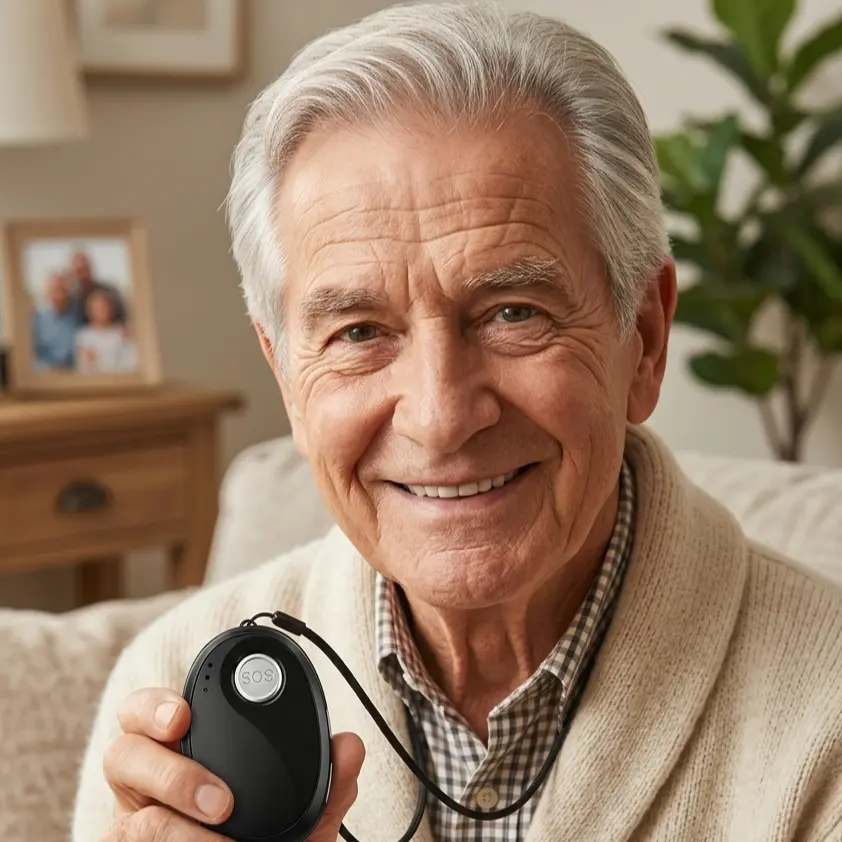
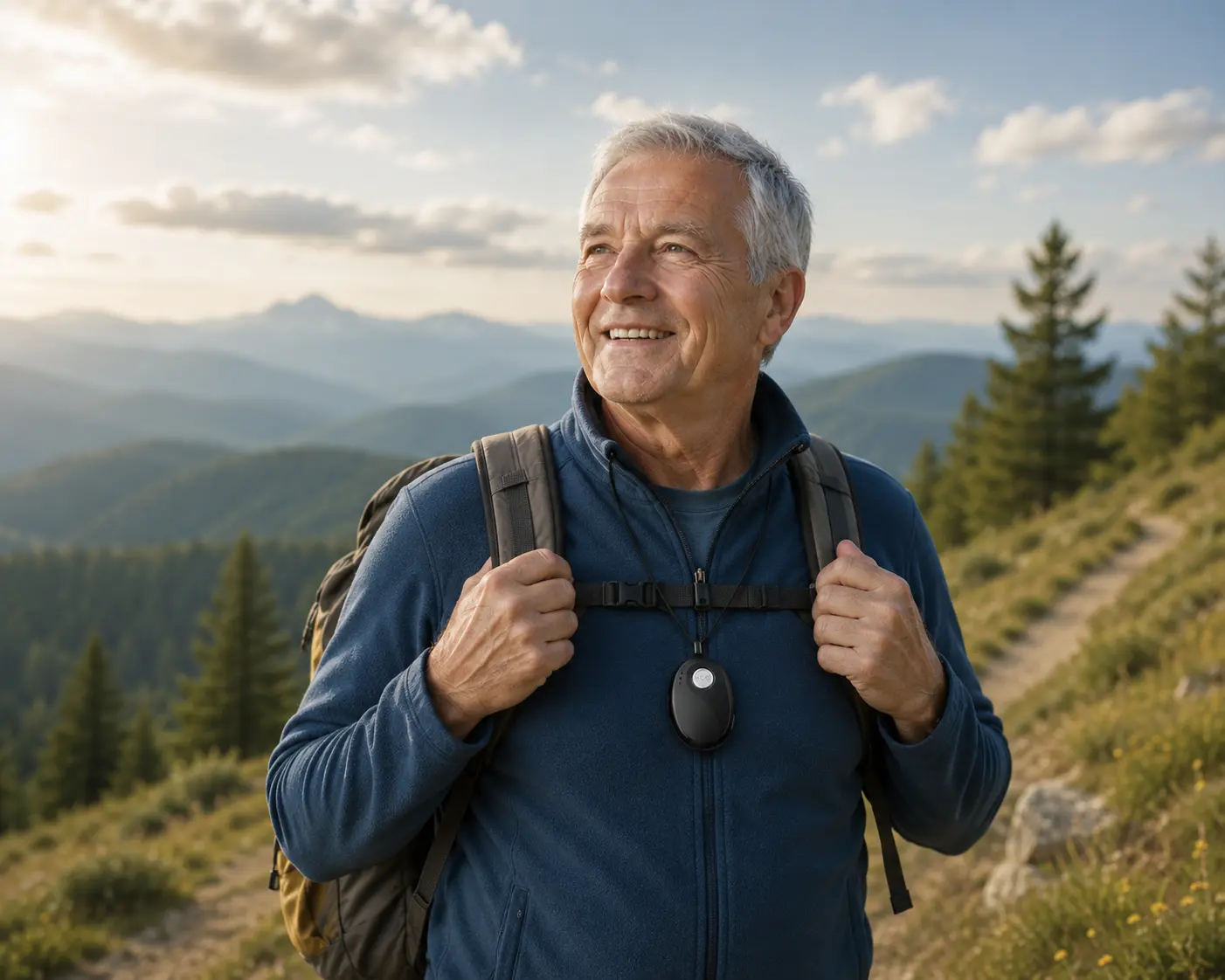
- A mobile emergency button can be especially valuable on the road: devices with their own SIM card and GPS work anywhere mobile coverage is available — so across large parts of Europe. At the push of a button, your saved trusted contacts are alerted and your location is sent along.
- The principle behind it matters: in an emergency, your own family and trusted contacts are notified first; a 24/7 emergency call centre also stands ready as a backup if no one can be reached.
That way the older traveller stays independent on the road, while relatives at home have the reassurance of being informed immediately if something happens.
Safe on Foot in Unfamiliar Surroundings
In a strange city or accommodation, the hazards differ from those at home: unfamiliar stairs, slippery hotel floors, poorly lit paths.
- Wear sturdy, closed shoes with non-slip soles — even for short distances.
- On arrival day, make yourself familiar with the accommodation: where is the bathroom, where is the light switch, how do you get to the toilet at night?
- Use the handrails on stairs and take your time. Rushing is the most common cause of falls.
Heat and Drinking Enough
In summer especially, and at southern destinations, the warmth is quickly underestimated. Older people often feel thirst less clearly and dehydrate faster.
- Drink regularly, even without a strong feeling of thirst.
- Avoid the midday heat and seek out shade.
- Plan demanding excursions for the cooler morning or evening hours.
Emergency Information Within Reach
In an emergency, every minute counts. Carrying key information on you makes things easy for those who help.
- An emergency card with your name, pre-existing conditions, allergies and your relatives' contact details — ideally in the local language or in English.
- The address of your accommodation noted down, in case you lose your bearings.
- Knowing the emergency numbers of the country you're visiting.
A Quick Checklist Before You Leave
- Is there enough medication, plus a reserve, in your hand luggage?
- Is the medication list with active-ingredient names ready?
- Is the emergency card filled in with contact details?
- Are your phone and any emergency device fully charged?
- Do your relatives know your travel dates and the address of your accommodation?
- Is the travel first-aid kit packed and the international health cover checked?
Anyone who ticks off these points has settled the most important safety questions and can look forward, relaxed, to the lovely sides of the trip.
Conclusion
Age is no reason to stay home. With a little planning, the right medication packed and the security of reaching help quickly in an emergency, older people too can travel with a light heart. As a family, talk openly about the trip — prepared together, the holiday becomes a relaxing time for everyone involved.
Note: This article is no substitute for medical advice. Please discuss longer trips and any changes to your medication with your GP beforehand. NOA is not a medical device.