An emergency folder for seniors contains everything helpers need straight away in an emergency: personal details, current medication, existing conditions and allergies, contact details for family members and the GP practice, and notes on any advance care documents. The emergency folder is kept in a fixed, easy-to-find place at home, and trusted people know where. The emergency folder should be updated regularly, at least after every change in medication.
What is an emergency folder?
An emergency folder is a collection of a person's most important personal and medical information, stored so that paramedics, family members or neighbours can find it in an emergency without a long search. The emergency folder does not replace a medical record, but it bridges the first few minutes, when the person affected is often unable to give information themselves.
For older people, an emergency folder is especially valuable. After a fall, during severe exhaustion or in a moment of sudden confusion, it is hard to list every medication and every existing condition. An up-to-date emergency folder then gives helpers a reliable basis, so that they do not have to rely on memories or guesswork.
The outward form of the emergency folder matters very little. A simple ring binder or a clear plastic sleeve with a few easy-to-read pages is perfectly sufficient. What counts is that the emergency folder is complete, legible and current.
What information belongs in the emergency folder?
The emergency folder should contain all the details helpers need to act quickly and correctly: who the person is, which medication they take, which conditions and allergies are known, and whom to contact. Anything beyond that is useful but secondary.
- Personal details: The emergency folder gives the full name, date of birth, address and, where applicable, health insurance details.
- Medication plan: Every medicine is listed with its name, dose and time of day, including over-the-counter remedies and supplements.
- Existing conditions: Known diagnoses such as heart disease, diabetes, dementia or previous operations are listed briefly and clearly.
- Allergies and intolerances: Allergies to medicines in particular are noted, because helpers need to know about them when giving treatment.
- Aids and implants: A pacemaker, a hearing aid, dentures or a walking aid are mentioned in the emergency folder.
- Contacts: Family members and trusted people are listed with their phone numbers, as are the GP practice and, where relevant, the home care service.
- Advance care documents: The emergency folder notes whether there is, for example, an advance directive or a power of attorney, and where the originals are kept.
A copy of important letters from doctors or a recent test result can also be helpful. Such documents should not overload the emergency folder, though: the first page must show the most important information at a glance.
Where should the emergency folder be kept?
The emergency folder should be kept in a fixed place at home that all trusted people know and that helpers can reach quickly. Clearly visible spots near the front door or in the kitchen work well, whereas drawers that only the resident knows about do not.
A small note on the inside of the front door or on the fridge can show helpers that an emergency folder exists and where it is. The note itself should not contain any health information, only the place where the emergency folder is kept.
For time spent out and about, a short version is worthwhile: a small emergency card in the wallet with the person's name, main conditions, allergies and the phone number of a trusted person. For older people who are often out of the house, this emergency card complements the emergency folder at home.
The emergency folder contains sensitive health information. The emergency folder therefore belongs inside the home, not openly in a stairwell or shared area, and copies should only go to people the older person explicitly trusts.
How can family members put together an emergency folder with their parents?
The emergency folder is best created during a calm appointment together, at which the older person decides what goes into it. That way the emergency folder remains a tool for independence and is not experienced as a form of control.
- Family members arrange a calm time and explain openly that the emergency folder makes it easier for helpers to do the right thing in an emergency.
- All medicine packs and any existing medication plans are gathered together, and the details are checked against each other jointly.
- If anything is unclear, the GP practice or the pharmacy confirms the current medication plan.
- The parents decide who will be listed as a contact in the emergency folder, and the people named are asked beforehand whether they are willing to be reachable in an emergency.
- The first page is designed as an overview in large, easy-to-read print, and every page shows the date it was last updated.
- The storage place is chosen together and shared with all trusted people.
Many family members find that conversations about planning ahead become easier when there is a concrete task. The emergency folder is a good starting point, because it is practical and takes nothing away from the parents, but gives them security instead.
How often should the emergency folder be updated?
The emergency folder should be updated after every change in medication, after every hospital stay and after every new diagnosis. Regardless of that, a fixed review once a year makes sense, for example every autumn.
An outdated emergency folder can mislead helpers, for instance if a medicine that was stopped long ago is still listed. That is why every page should show the date of the last update. If the date is old, helpers know to treat the information with caution.
The easiest way to keep the emergency folder current is a fixed habit: after every visit to the doctor, the older person or family members briefly check whether anything in the medication plan has changed.
How do an emergency folder and a mobile emergency button work together?
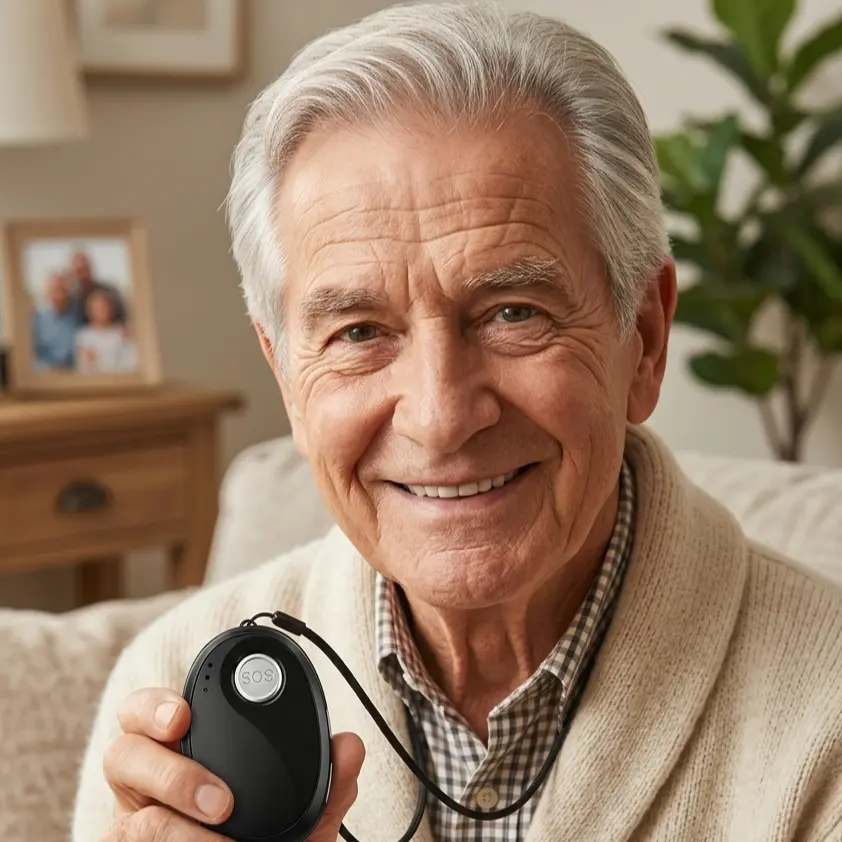
A mobile emergency button makes sure that someone finds out quickly in an emergency. The emergency folder makes sure that the helpers on site have the right information. The two do different jobs and work best in combination.
With NOA, alarms go first to family members and trusted people. If nobody can be reached there, the 24/7 emergency response centre steps in as the backup. Everyone in this emergency chain should know where the emergency folder is kept, so that they can tell paramedics or neighbours where to find it.
When setting up the emergency contacts for NOA, it therefore makes sense to discuss at the same time who knows about the emergency folder and who has a key to the home. That way technology and preparation work hand in hand, and no time is lost searching in an emergency.
Frequently asked questions
Does an emergency folder have to be on paper or digital?
An emergency folder can be handwritten or created on a computer; the only thing that matters is that it is easy to read. A printed paper version has the advantage that helpers can read it immediately, without a password and without power. A digital copy held by a trusted person can also be useful, but it does not replace the paper emergency folder at home.
What should not go into an emergency folder?
Bank details, PINs, passwords and cash do not belong in an emergency folder, because the emergency folder is meant to help helpers, not to create a risk. Originals of important documents are also better kept in their safe place; a note on where they are is enough. Long medical histories are unsuitable too, because helpers only need the key facts in an emergency.
Does a healthy older person need an emergency folder too?
Yes, an emergency folder also makes sense for healthy older people, because emergencies such as a fall or an accident often happen unexpectedly. For healthy people, the emergency folder is usually short: personal details, any allergies and the contacts for family members and the GP practice. The effort is small, and in an emergency helpers do not have to guess.
Should family members have a copy of the emergency folder?
A copy of the emergency folder held by a close trusted person is sensible, especially when family members live further away. Family members can then give information over the phone too, for example to a hospital. However, the copy should be kept just as up to date as the original, and the older person should decide who receives a copy.
NOA is not a medical device and does not replace medical or nursing care. Please discuss any questions about medication with your GP practice or pharmacy.