What to Do After a Fall: Getting the First Minutes Right
A fall happens in seconds – yet what happens in the minutes that follow often shapes the outcome more than the fall itself. Understandably, many people focus on prevention. But an equally important question is: what should you do when it does happen anyway?
This guide is written for older people and their families alike. It explains, step by step, how to stay composed in the first minutes after a fall – whether it is your own or someone else’s.
First: stay calm and don’t get up straight away
The first instinct after a fall is almost always to get back up quickly – out of embarrassment, shock or reflex. Yet that is exactly what carries the most risk. Standing up too hastily can cause dizziness, a second fall or make an existing injury worse.
Take a moment. Breathe calmly. Stay where you are for now and get a sense of the situation.
Check your body: where does it hurt?
Before you move, calmly check whether and where you feel pain.
- Gently move your arms, legs, hands and feet
- Watch for severe pain, numbness or the inability to move a body part
- Check whether your head was hit
If you are in severe pain, cannot move a limb, suspect a broken bone or have banged your head: do not get up. Stay down and call for help.
If getting up seems possible: step by step
If you feel unhurt and strong enough, raise yourself slowly and in stages – never abruptly.
- First roll onto your side and rest briefly
- Move onto your hands and knees
- Crawl to a stable piece of furniture, such as a chair
- Support yourself with both hands and rise slowly
- Sit down first and wait until you feel steady
Pause between each step. If dizziness or pain sets in, stop.
If getting up isn’t possible: get help and stay warm
If you cannot get up on your own, the most important things are to attract attention and to avoid getting cold.
- Call out for help or knock on a wall or radiator
- Use a phone or an emergency button if within reach
- Pull a blanket, cushion or clothing towards you
- Try to move onto a rug or something soft
- Move your arms and legs now and then to keep the blood flowing
Why the first minutes matter so much
Anyone who lies helpless on the floor for a long time after a fall is at risk even without a serious injury. Experts call this the long lie. Within an hour it can lead to hypothermia, circulation problems, pressure sores and muscle loss. And the longer someone stays alone, the greater the worry becomes and the harder it is to act calmly.
So the sooner someone notices that help is needed, the better. This is exactly where well-thought-out emergency planning proves its worth.
Organising help: who should be reachable?
Ideally, the first to respond in an emergency are trusted people – family, neighbours or close friends. They know the person, know where they live and can be there quickly or call for further help.
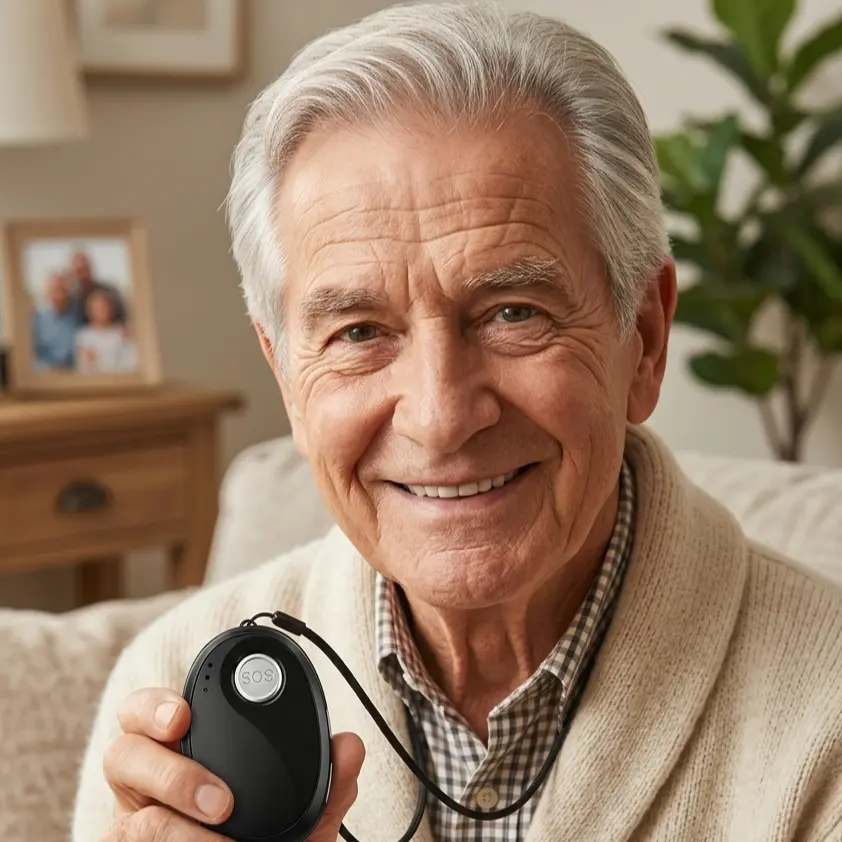
A mobile emergency button such as NOA connects at the push of a button to exactly these trusted contacts and sends the GPS location at the same time – even when out and about, with no phone nearby. If no one from the personal circle can be reached, a 24/7 emergency call centre is also available as a backup. This creates a safety net of trusted people and professional support.
Even without a visible injury: take the fall seriously
Even if everything seems fine after a fall, it should not be brushed aside. Many falls have a cause that can happen again.
- Have possible triggers checked by a doctor, such as circulation problems, dizziness or poor eyesight
- Have your medication reviewed, as some can encourage dizziness
- Take any emerging fear of falling seriously – it often leads to less movement and so raises the risk of further falls
How to prepare today
The best time to prepare for a fall is before it happens.
- Always keep a phone or an emergency button within reach
- Set up fixed emergency contacts and talk to them about it
- Remove trip hazards around the home
- Practise, calmly, how to get back up safely
Being prepared for an emergency means losing less time at the moment of a fall – and gaining confidence in everyday life.
Conclusion
A fall is a fright, but not a reason to panic. Staying calm, checking your body, getting up carefully or deliberately calling for help gets you through the crucial first minutes. And knowing in advance how to reach the right people quickly gives you double the protection.
Note: This article is for general information and does not replace medical or nursing advice. In case of injury, persistent symptoms or a medical emergency, please contact emergency services or your doctor. NOA is not a medical device.