
Scams Targeting Older People: How to Spot Them and Stay Safe
Fraudsters deliberately set their sights on older people. Not because older people are naive, but because they are more often reachable at home, tend to respond politely and helpfully, and are less likely to be familiar with the latest tricks. Once you know the typical scams, you can see through them at the decisive moment — and that is exactly what this article is about.
Why Older People Are Especially Targeted
Fraudsters work methodically. They look for people in whom three things come together: availability, trust and, ideally, a sense of being alone. Someone who is home alone during the day and is even pleased to receive a call or a visitor is an easier target than someone constantly surrounded by family and colleagues.
That is no reason for shame — it is a reason to be informed. The good news: almost every scam follows the same patterns. Once you understand those patterns, you can often recognise the fraud after just a few sentences.
The Most Common Scams
### The Shock Call
A distressed voice comes on the phone: a grandchild, a daughter, a close relative. Something terrible has supposedly happened — an accident, an emergency, an arrest — and a large sum of money is needed at once. The callers deliberately rely on panic, so that the victim has no time to think.
### People Posing as Officials
Someone claims to be a police officer, a bank employee or an official and warns of a supposed danger: burglars in the neighbourhood, an "insecure" bank account, a mistake with a transfer. The goal is always the same — to get you to "move" cash or valuables "to safety", or to hand over your login details.
### Bogus Tradespeople and Meter Readers at the Door
Friendly people in work clothes turn up at the door: supposed meter readers, tradespeople, staff from a utility company. They just want to check something "very quickly". Once inside, they distract you and search through rooms — or they pressure you into an overpriced on-the-spot repair.
### Prize Promises and Subscription Traps
By letter, phone, email or text comes the happy news: a big win, a trip, a prize. All that is still needed is a "small fee" or your bank details. The prize never arrives — the money is gone.
### Phishing by Email, Text and Phone
A message that appears to be from your bank, a parcel service or a well-known company asks you to click a link or to enter passwords, PINs and codes. The pages look deceptively genuine, but they belong to the fraudsters.
The Five Warning Signs
However different the scams may seem, almost all of them have the same triggers. If one or more of these signs appears, be extremely cautious:
- Time pressure: "You have to act right now." Genuine banks, authorities and relatives always give you time.
- Secrecy: "Don't tell anyone about this." Reputable organisations never forbid you from speaking to your family.
- A demand for money or data: It comes down to a transfer, cash, gift cards, passwords or PINs.
- An unusual channel: An authority writing via a messaging app, or a bank asking for your PIN over the phone — no genuine organisation does that.
- Too good or too awful to be true: A huge windfall or a sudden catastrophe is meant to switch off your clear thinking.
How to Protect Yourself
- Hanging up and closing the door is allowed. Politeness ends where someone puts you under pressure. You owe no one an explanation.
- Never hand over money or data under pressure. No genuine bank, police force or authority asks for cash, cards or secret numbers over the phone or at the door.
- Always call back yourself — using a number you know, for example from your own address book or from your official bank card. Never use the number the caller gives you.
- Don't let strangers into your home. Ask to see identification, and if in doubt call the utility company or business before you open the door.
- Talk to someone before you act. A quick call to a trusted person breaks the spell of almost any trick. It is precisely that one moment of checking that fraudsters use their time pressure to prevent.
What to Do If It Has Already Happened
Even experienced, attentive people fall for skilled fraudsters. If you have been caught out, there is no reason for shame — the perpetrators are professionals. What matters is to act quickly:
- If you have lost money, contact your bank immediately and have transfers or cards blocked.
- Report the incident to the police — every report helps to catch perpetrators and warn others.
- Tell people you trust, so they can support you and help prevent it happening again.
How an Emergency Button Helps in Moments Like These
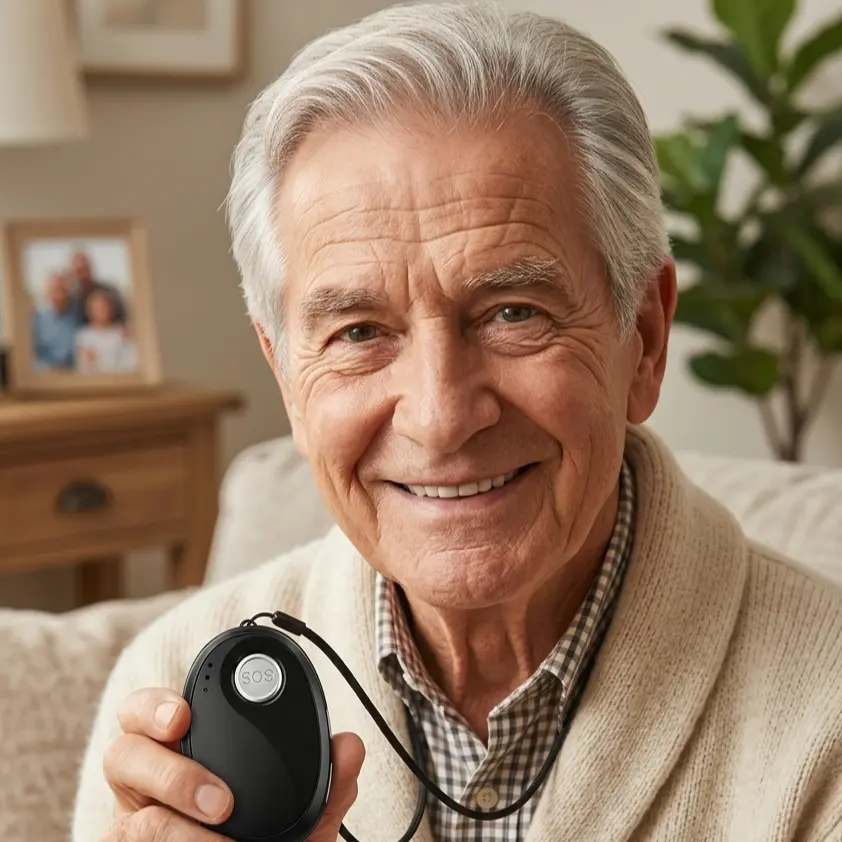
An emergency system like NOA does not prevent fraud — but it helps exactly where fraudsters are strongest: in isolation. If an unknown person is standing menacingly at the door, or a call feels threatening, a single press of the button is enough to reach trusted family members first. That way it can be settled in seconds: "Did you really call?" or "Should I open the door?" And if no one in the family is reachable, the 24/7 emergency centre is there as a backup.
It is exactly this quick check that breaks through the pressure almost every scam relies on. Hearing a familiar voice at the right moment makes a rushed decision far less likely.
For Relatives: Start the Conversation
Talk openly about scams — not as a warning from on high, but as a shared topic. Agree on a family code word for genuine emergencies that fraudsters cannot possibly know. And stay in touch regularly: someone who is already in close contact is less often alone with a decision — and therefore better protected.
Conclusion
Fraud against older people thrives on surprise, pressure and isolation. Anyone who knows the patterns, takes their time and, when in doubt, asks a trusted person takes away the perpetrators' most important tool. Safety here does not come from technology alone, but from knowledge, calm and a good network of people.
Note: NOA is not a medical device and does not replace police or legal advice. If you have a specific suspicion of fraud, please contact your bank and your local police.